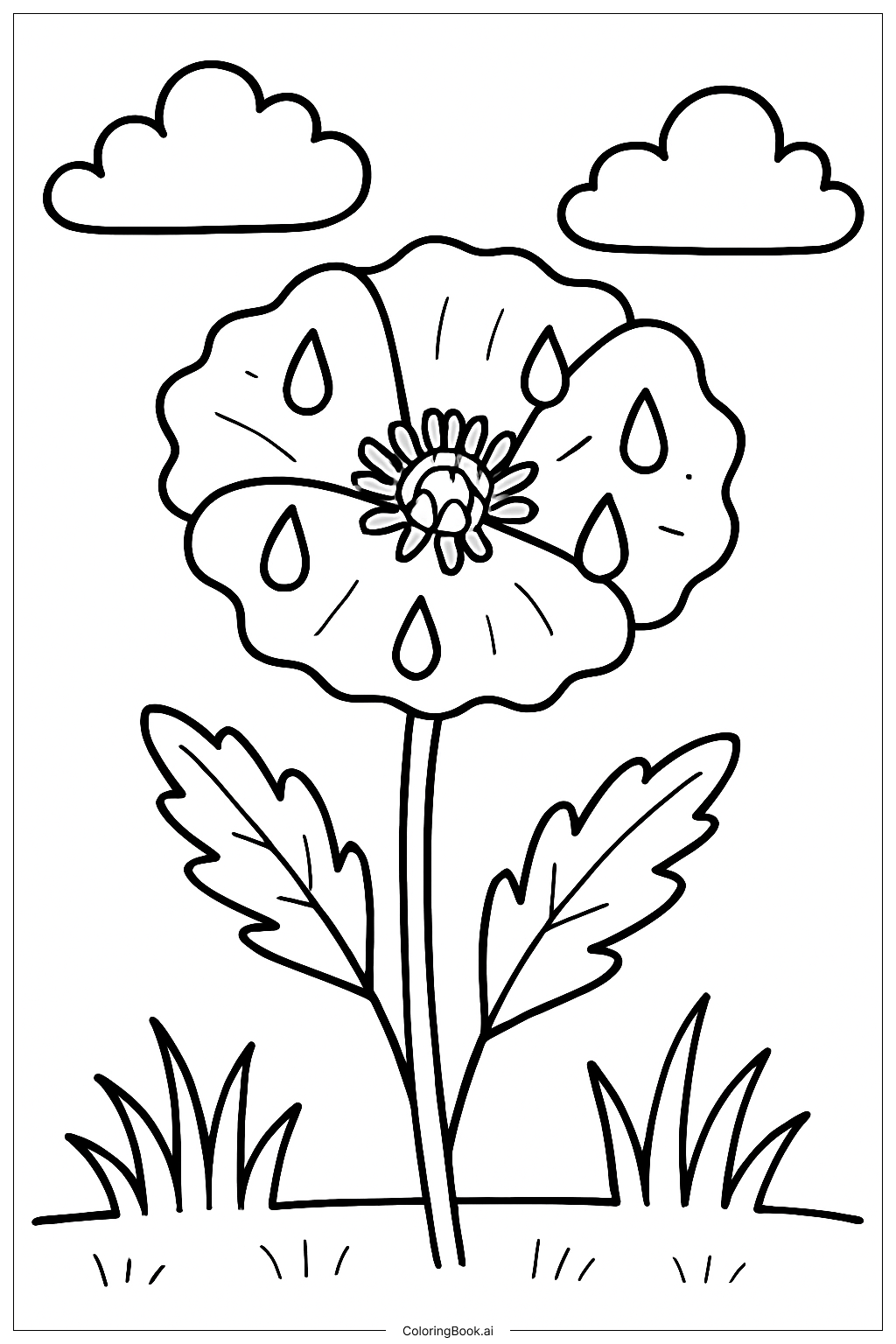
Coloring tips: How to color Poppy Flower With Raindrops On Petals coloring page well?
Use bright red or orange colors for the poppy petals to make the flower look lively. You can add shades by using darker colors near the petals' edges or where the petals curve to show depth. Use light blue or gray for the raindrops to give the effect of water. Color the stem and leaves with different shades of green to show light and shadow. Use light green or yellow-green for the grass to contrast well with the flower. For the clouds, soft light gray or light blue will look nice. Try blending colors gently on the petals and leaves to make the picture more vibrant and natural. Don’t forget to color inside the raindrops carefully to show transparency.
Coloring challenges: Which parts are difficult to color and need attention for Poppy Flower With Raindrops On Petals coloring page?
1. Coloring the raindrops on the petals can be tricky because you need to show they are clear and shiny without making them too dark. Using the right light blue or very light gray is important.
2. The flower petals have curved edges and some lines that show texture. Coloring these sections evenly while keeping the curves natural can be challenging.
3. The center of the flower has many small parts. Coloring these tiny shapes neatly requires patience and a steady hand.
4. The leaves have veins and notches that need attention to detail. Using different shades of green to highlight these veins can be difficult.
5. Blending colors nicely from light to dark on the petals and leaves to create a 3D effect needs practice and skill.
Benefits of coloring books: Advantages of drawing Poppy Flower With Raindrops On Petals coloring page
Coloring this poppy flower page helps improve fine motor skills, especially by coloring around the small raindrop shapes and flower details. It encourages concentration and focus as you carefully fill in the petals and leaves. Learning to use different shades and blending techniques on petals and leaves helps develop a sense of color and light. This coloring activity also stimulates creativity by letting you choose colors and decide how to shade the flower and background. Overall, it’s a fun way to practice patience and artistic skills while enjoying nature’s beauty.